Call us: (+39) 039 894 61 16 - Contact us
The image is for illustrative purposes only and may not fully reflect the characteristics of the actual product.
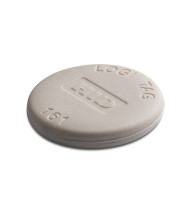
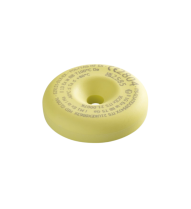
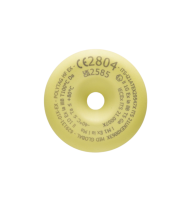
HID Global Sentry HF ICODE 3 in a round Ø14.5 mm format. Reference PCA-01027 provides clear identification for RFID projects requiring the stated compact size and circular geometry.
 Secure Payments
 Delivery policy
 Refund policy
SENTRY Ø14.5 MM HF ICODE 3 is an HID Global RFID tag intended for professional identification, unique association and traceability activities. The supplied configuration states HF ICODE 3, in the Ø14.5 mm format and standard version. These details help project teams select the correct model without adding unsupported specifications. The product can support integrators, technical departments, manufacturers and operators that need structured, repeatable and well documented RFID workflows.
Sentry PCA-01027 combines HF ICODE 3 technology with a stated round Ø14.5 mm format. Geometry and size are the main selection elements when available space, the planned position or the object design requires a compact circular shape. Before confirming the model, the diameter needs to be compared with project tolerances and reading should be verified in the actual position. This version does not carry the PRO designation and should be controlled separately from the corresponding professional variant.
RFID tag selection should begin with the real requirements of the application. Available space, chip technology, frequency band, object geometry, mounting position and reading conditions can all affect the overall result. SENTRY Ø14.5 MM HF ICODE 3 is clearly identified by reference PCA-01027. Before a large deployment, the tag should be tested with the actual reader, antenna, carrier material and operating distances expected in the process.
The compact format supports integration where installation space needs careful management. The tag may be evaluated for identifying components, containers, carriers or other items that suit the installation method defined by the customer. Final suitability depends on the environment, surrounding materials and operating cycle. A sound project therefore includes samples, acceptance criteria and documented performance checks under representative conditions.
The stated HF ICODE 3 configuration helps align the tag with the planned RFID architecture and keeps master data, readers and software procedures consistent. The chip designation is useful when distinguishing similar variants and limiting errors during purchasing, validation and replacement. It does not by itself guarantee compatibility with every infrastructure. Operating protocol, programming approach, reader settings and data format must be confirmed by the responsible technical team.
For a dependable process, each product reference should have a coding rule, a defined data owner and a verification procedure. The tag then becomes part of a wider information system in which the captured identifier is linked to a product, batch, location, status or processing stage. Consistent data structures improve information retrieval and make integration easier with business applications, production tools or purpose-built tracking platforms.
Physical handling deserves the same attention as digital configuration. Storage, movement, surface preparation and the attachment method should be established before installation. Teams should separate lots, retain the original reference information and visually inspect products on receipt. Where encoding or personalization is planned, an approved sample and a record of the chosen parameters help maintain uniform results across multiple deliveries.
Validation should use representative scenarios, including real objects, realistic orientations, operating distances and potential sources of interference. Testing should extend beyond a single successful read and assess repeatability, process speed, success rate and exception handling. Results can be recorded in a concise validation protocol that supports comparison between positions or configurations and provides operators with clear working instructions.
For professional purchasing, reference PCA-01027 maintains a precise connection between the request, purchase order and received goods. The catalog price relates to the specified configuration, while the minimum order quantity needs to be included in planning. Before confirmation, buyers should check availability, commercial conditions, any requested services and the exact product version, especially when the project depends on a particular configuration.
Ongoing system management includes periodic reader checks, review of data flows and analysis of missed events. When a tagged item or tag is replaced, the process should ensure that the new identifier is linked correctly to the relevant master record. This approach limits manual mistakes and keeps the solution manageable over time. The tag should be treated as a process component rather than an isolated item.
Final selection should be confirmed through application testing and the technical documentation available for the project. Frequency, chip and format need to match the infrastructure requirements. Careful initial validation helps reduce rework, improve operating continuity and create an RFID system that remains aligned with the intended identification and traceability objectives.
Specific References
HID Global Sentry HF ICODE 3 in a round Ø14.5 mm format. Reference PCA-01027 provides clear identification for RFID projects requiring the stated compact size and circular geometry.